Address
304 North Cardinal
St. Dorchester Center, MA 02124
Work Hours
Monday to Friday: 7AM - 7PM
Weekend: 10AM - 5PM
Address
304 North Cardinal
St. Dorchester Center, MA 02124
Work Hours
Monday to Friday: 7AM - 7PM
Weekend: 10AM - 5PM
A swim spa is a small pool's worth of water in a hot tub's footprint. Here is how to pick and run a salt water system that actually keeps up.
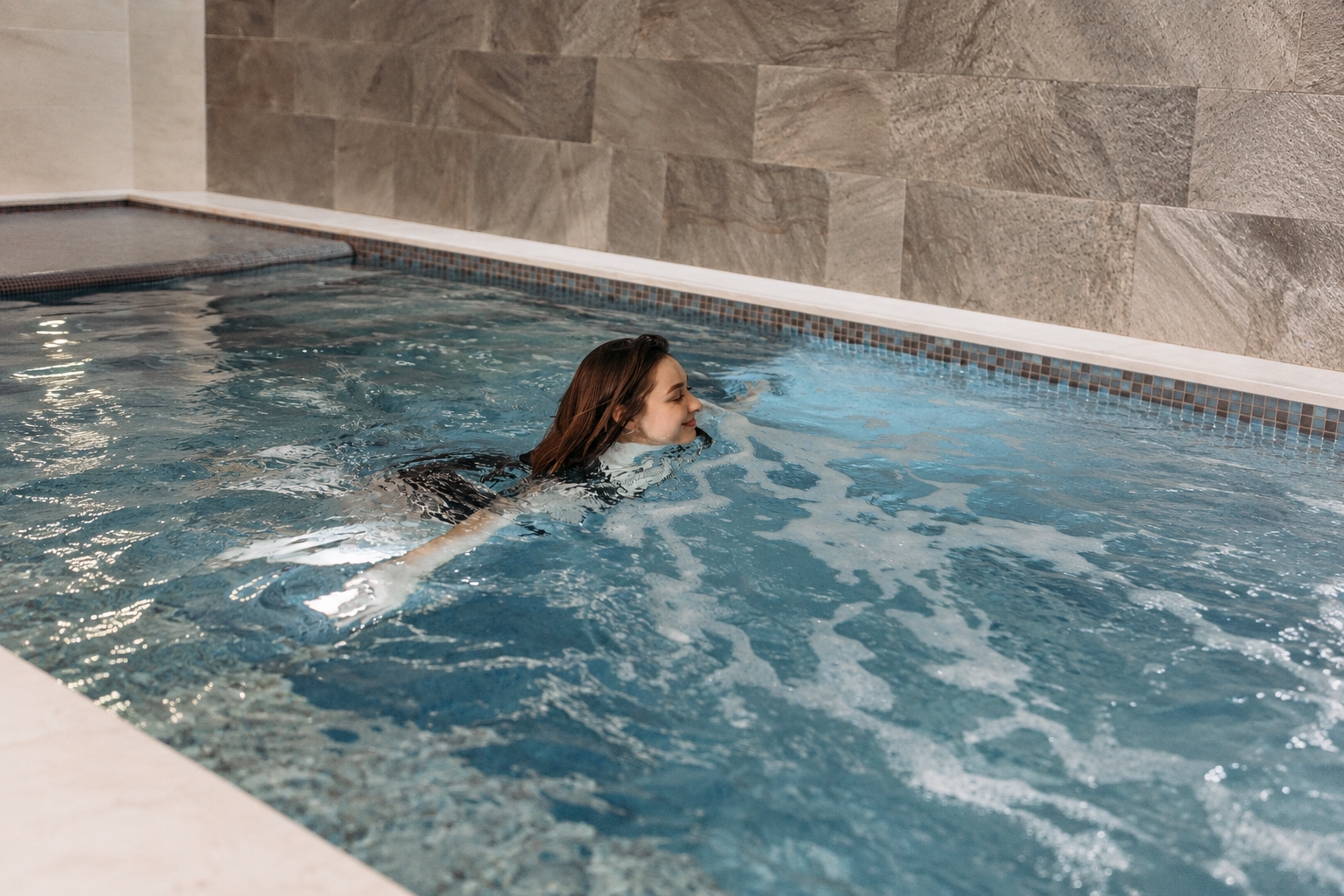
A swim spa sits in an awkward, wonderful middle ground. It is bigger than a hot tub and smaller than a pool — which means it inherits the water-care headaches of both. The water volume that makes a swim spa great for swimming is exactly what makes manual chlorination such a grind. A salt water system is, for most swim spa owners, the single biggest quality-of-life upgrade available.
This guide explains why swim spas gain more from salt than almost any other water body, how to size a generator to your spa, how installation differs from a hot tub, and what to do if your spa is on the larger side.
The short version: a swim spa holds a lot of water, and sanitizer demand scales with volume.
A typical hot tub is 300–500 gallons. A swim spa often runs 1,000–2,500 gallons or more — sometimes several times the water of a standard tub. Every gallon of water is more surface for bacteria and algae to colonize, more bather load to sanitize after a swim session, and more chemical to keep balanced. When you dose chlorine by hand, that volume turns a quick weekly task into a constant one.
A salt chlorine generator flips the math. Instead of you adding sanitizer, the system makes it continuously from salt already in the water. The bigger the spa, the more valuable that automation becomes, because the manual alternative gets proportionally worse as volume grows.
Three concrete wins for swim spa owners:
For the day-to-day care routine after install, see our Hot Tub Salt Water-Care Guide — the principles apply directly to swim spas.
To appreciate what a salt system removes, it helps to sit with what manual care actually looks like at swim spa scale.
A standard hot tub might need a chlorine dose a few times a week. A swim spa, with several times the water and a habit of high-bather-load swim sessions, can need attention far more often — and each “attention” is a measured pour of liquid or a dropped tablet, followed by a wait, a test, and an adjustment. Miss a couple of hot days and the larger water body, counterintuitively, can still drift out of range fast once bather waste and warmth stack up.
Then there is the cost and clutter. Bulk chlorine for a large spa is a recurring, heavy, and mildly unpleasant purchase. Salt, by contrast, is added rarely and in a single pass at fill or top-up. The day-to-day mental load drops from “am I keeping up?” to “glance at the display.”
This is why the swim spa is the strongest case for salt of any residential water body short of a full pool. The volume is large enough that automation pays off dramatically, but the spa is still small enough that a single properly sized generator handles it.
The comparison is not about which sanitizer is “better” — both use chlorine. It is about who does the work of producing and maintaining it.
| Traditional (manual chlorine) | Salt water system | |
|---|---|---|
| Who adds sanitizer | You, by hand, repeatedly | The generator, continuously |
| Day-to-day effort | Frequent dosing and testing | Weekly testing, rare salt top-ups |
| Water feel | Can be harsher, more chemical smell | Softer, lower and steadier chlorine |
| Recurring cost | Ongoing chlorine/bromine purchases | Mostly salt, added occasionally |
| Scales with volume | Worse as gallons increase | Better as gallons increase |
At hot tub scale the difference is nice. At swim spa scale — with several times the water — the difference is decisive. The larger the body of water, the more a salt system earns its keep.
Sizing is the part owners get wrong most often, and it is the most important decision you make. The rule is simple: match the generator’s maximum gallon rating to your spa’s actual water volume, with a little headroom.
Why headroom matters: a generator running at or near its limit all season wears harder and leaves no margin for heavy use. A unit rated slightly above your volume lets you run at a comfortable mid-output and still have room to push when needed.
The Zelinhol MagicSpa salt chlorine generator built for hot tubs and swim spas is rated for up to 2,500 gallons. That single number covers the majority of residential swim spas and gives comfortable margin for many compact models. Key specs that matter for swim spa use:
| Feature | Why it matters for a swim spa |
|---|---|
| Coverage up to 2,500 gallons | Matches most residential swim spas with headroom to spare |
| Titanium salt cell | Resists corrosion in warm, salty, circulating water |
| 10-level adjustable output | Ramp production up for swim sessions, down when idle |
| OLED display (salt/output/mode) | See system status at a glance without test strips |
| Self-cleaning cell | Reduces scale buildup from constant circulation |
| Quick-change cell | Service or replace the cell yourself, no technician |
Before you commit, confirm your spa’s volume from the manufacturer spec or manual. If you are not certain, our Salt System Compatibility Guide walks through matching a unit to your specific spa.
The technology is identical — control unit plus inline salt cell — but a swim spa’s size and plumbing change a few practical details.
More plumbing, more planning. Swim spas often have larger equipment compartments and sometimes two pump circuits. Plan the cell location on the return line where flow is consistent. Because the water volume is larger, you want uninterrupted circulation through the cell, not just during a filter cycle.
Longer initial salt dissolve time. With more gallons, the same target salinity means more total salt and more time for it to fully dissolve and circulate. Add it gradually with the pump running, and expect to test over a couple of days rather than hours.
Bigger first salt estimate. Use the Hot Tub Salt Calculator with your actual gallon figure. The tool applies water density to convert your target ppm into a salt weight, then reminds you it is a first estimate — add gradually, circulate, and retest. For a 2,000-gallon swim spa at a 2,500 ppm target, that works out to roughly 42 lb of salt from a fresh fill, so buy salt accordingly and add in stages.
A full pre-install walkthrough, in order, is on our Installation Checklist.
Most residential swim spas fall within the 2,500-gallon rating of a purpose-built hot tub/swim spa generator. If yours is at or above that upper bound, a few honest points apply:
We are deliberately not over-promising here. A salt system is only as good as its match to your water volume — and for the typical swim spa, a properly sized 2,500-gallon-rated unit is exactly the right tool.
The break-in period is where most owners either gain confidence or develop a habit of over-tinkering. Here is what a calm first two weeks looks like.
Days 1–2: Add salt gradually with the pump running. Do not expect an instant, perfectly steady reading. Let the water circulate, then test. Top up salt only if you are clearly below target after it has had time to dissolve.
Days 3–7: Watch the free chlorine and salt readouts. Resist the urge to max out output. Set a mid level, observe, and adjust in small steps. The goal is a steady hold in range, not a spike.
Weeks 2+: Once levels are stable, shift to the weekly test rhythm. Note your readings so you can spot slow drift. If chlorine holds with the output at a comfortable mid setting, you have sized and tuned correctly.
The most common mistake in this window is chasing a number by cranking output, which then overshoots and sends owners in the other direction. Small, patient adjustments beat large swings every time.
Swim spa maintenance follows the same rhythm as a hot tub, just at a larger scale:
When the water clouds, chlorine reads low despite a running system, or the salt level will not climb, our Troubleshooting Guide connects the symptom to the likely cause and fix.
If your spa is within the generator’s rated coverage (the Zelinhol unit covers up to 2,500 gallons), yes. Most residential swim spas fit. Confirm your exact volume before buying; our Compatibility Guide helps.
More, because there is more water. The amount scales with volume and target ppm. Plug your gallons into the Hot Tub Salt Calculator for an estimate, then add gradually and retest.
The components are the same, but a swim spa’s larger plumbing and equipment area mean a bit more planning for cell placement and circulation. The pre-install steps are laid out on our Installation Checklist.
Yes — that is exactly what adjustable output is for. Raise the level during heavy use and lower it when the spa is idle. The 10-level control on the Zelinhol unit makes this tuning straightforward.
Verify fit first via the compatibility guidance rather than assume. A unit rated to 2,500 gallons is built for that range; beyond it you would be running at the edge with less margin. Match the generator to your actual volume for reliable results.
A swim spa is, in water-care terms, a small pool that happens to live in your backyard. The same volume that makes it fun is what makes manual chlorination a chore — and that is precisely why a salt water system pays off most here. Size the generator with headroom to your gallons, install it on a consistent return-flow line, tune output to your use, and let the system carry the daily sanitizing load.
The Zelinhol MagicSpa salt chlorine generator for hot tubs and swim spas is built for this exact job: titanium salt cell, OLED readout, 10-level output, self-cleaning, and quick-change service, covering up to 2,500 gallons.
Explore the unit here: Salt Chlorine Generator for Hot Tubs & Swim Spas (Up to 2500 Gallons). And before you decide, run your spa’s volume through the Hot Tub Salt Calculator to see exactly how much salt you will need.