Address
304 North Cardinal
St. Dorchester Center, MA 02124
Work Hours
Monday to Friday: 7AM - 7PM
Weekend: 10AM - 5PM
Address
304 North Cardinal
St. Dorchester Center, MA 02124
Work Hours
Monday to Friday: 7AM - 7PM
Weekend: 10AM - 5PM
The 30-second version: electrolysis through titanium plates. The full version, and why cell size matters.
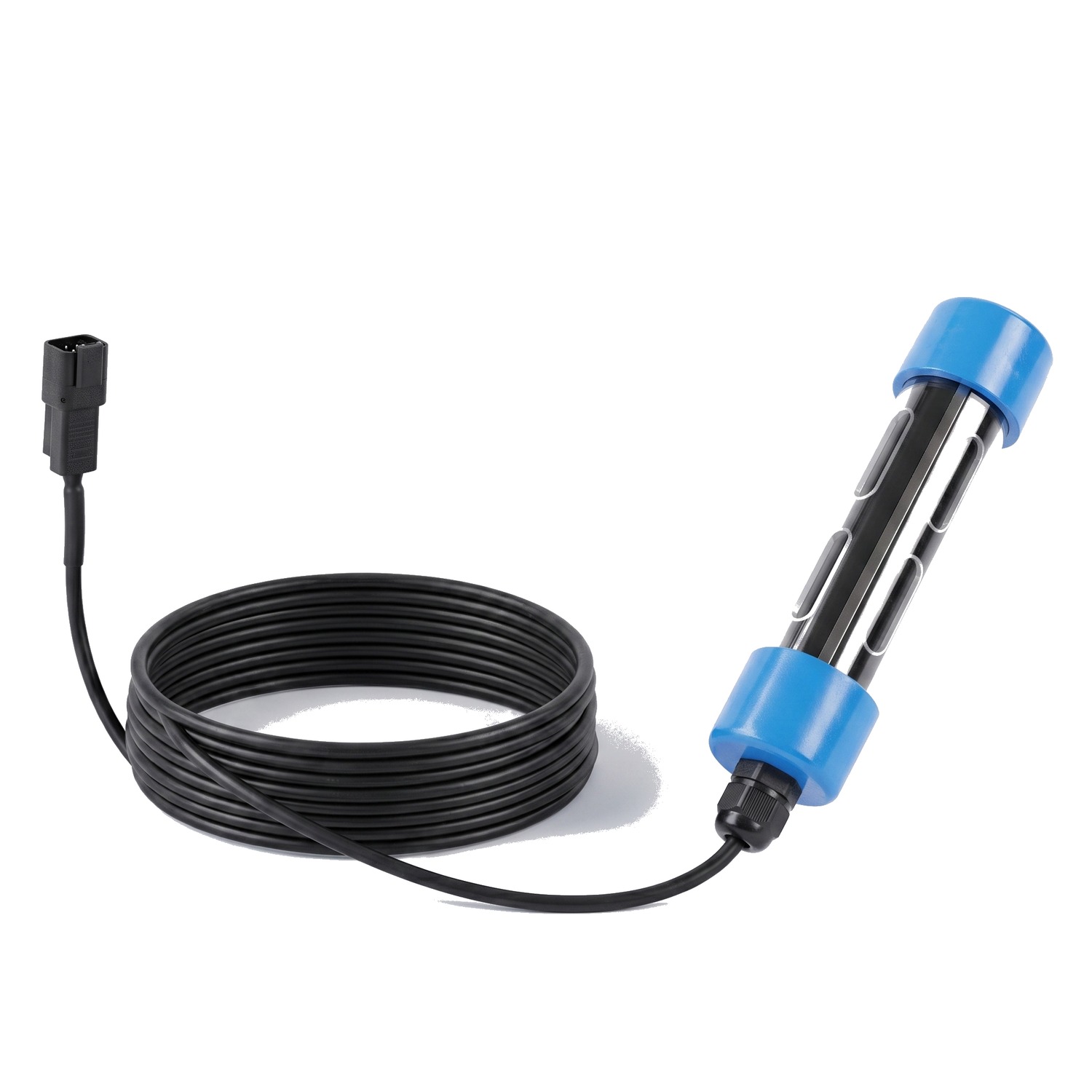
The 30-second version: salt water flows past a small stack of titanium plates that are electrically charged. The plates convert dissolved salt into chlorine. The chlorine immediately dissolves into hypochlorous acid, the same sanitizer used in any chlorinated spa. The longer version is where it gets interesting.
Sodium chloride (NaCl) dissolves in water into sodium ions (Na+) and chloride ions (Cl-). When you run a low-voltage direct current through titanium electrodes submerged in that water, the chloride ions give up an electron at the anode and become chlorine gas (Cl2). The chlorine reacts with water to form hypochlorous acid (HOCl) and hydrochloric acid (HCl). The HOCl is what kills bacteria and oxidizes organics. That is it.
Titanium is the only common metal that survives the brutal environment inside a salt cell. The anode side is constantly evolving chlorine gas, which is corrosive. The cathode side is generating hydrogen gas and is in a high-pH micro-environment. Plain steel would dissolve in weeks. Even stainless steel pits. Titanium forms a stable oxide layer that resists both chlorine and salt indefinitely. The plates are usually coated with a ruthenium-iridium mixed-metal oxide catalyst that lowers the energy needed to drive the reaction, which means lower cell voltage and longer plate life.
A 400-gallon spa needs roughly 1-2 grams of free chlorine per hour of operation to keep up with bather load. That is a tiny amount. A typical home spa cell produces 10-25 grams per hour at full output, which means the cell cycles on and off every few minutes, controlled by your ORP or chlorine sensor. The cell is not running flat out; it is being pulsed by the control board. Bigger cells mean more production headroom, longer off-times, and longer life.
The ruthenium-iridium coating slowly wears off over thousands of operating hours. As it wears, the cell needs higher voltage to produce the same chlorine output, and eventually higher than the controller can deliver. This is why salt cells are consumables with a service life that varies with use and water chemistry. Hard water accelerates wear because calcium deposits form an insulating scale on the plates, forcing the voltage higher for the same current.
A high-quality aftermarket cell uses the same ruthenium-iridium coating and same grade of titanium as the OEM, with plate geometry matched to the original controller. The Zelinhol replacement cell for ACE systems uses a coated titanium plate stack that matches the ACE controller output profile, so installation is a 15-minute plug-and-play.