Address
304 North Cardinal
St. Dorchester Center, MA 02124
Work Hours
Monday to Friday: 7AM - 7PM
Weekend: 10AM - 5PM
Address
304 North Cardinal
St. Dorchester Center, MA 02124
Work Hours
Monday to Friday: 7AM - 7PM
Weekend: 10AM - 5PM
An aftermarket ACE cell isn't inherently risky — but it isn't automatically fine either. Here's what a compatible cell must get right, how to vet any seller, and what to check in your warranty terms.
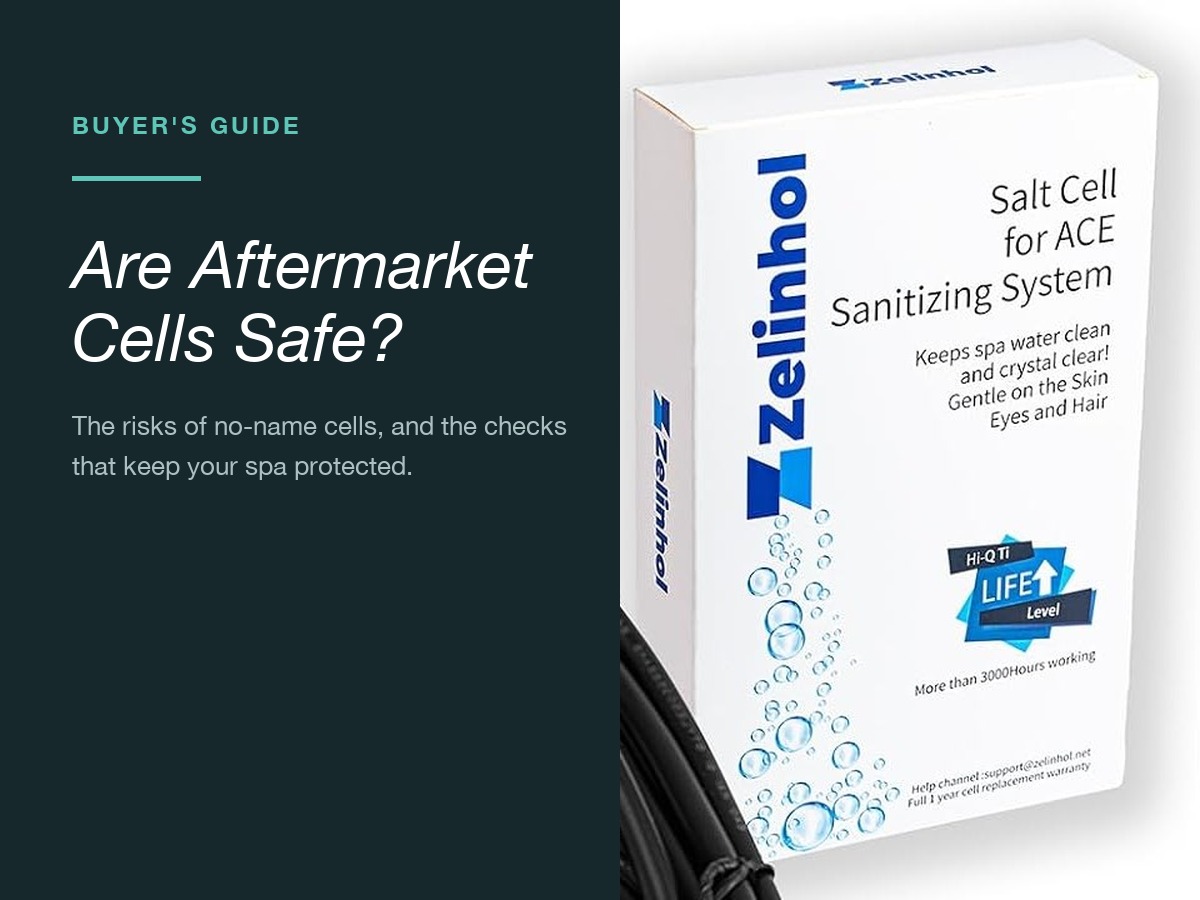
Short answer: an aftermarket replacement cell for the ACE® Salt Water System isn’t inherently risky — but it isn’t automatically fine, either. Whether a compatible 76078-style cell works out for you comes down to three things: whether it’s a true mechanical and electrical match for the system, whether the seller actually stands behind it, and what your spa’s warranty terms say. Here’s the honest breakdown, with no sales pitch.
Dealer prices for the OEM 76078 cell sit firmly in the high triple digits as of late 2026. That number deserves context, because it’s easy to read it as “the part must be worth that much.”
It mostly isn’t a materials story. It’s a distribution story. OEM spa parts move through a dealer network — manufacturer to distributor to dealer — with each layer adding cost, and OEM part pricing is set with the dealer service channel in mind. When you buy the OEM cell, a meaningful share of what you pay funds that channel, not the electrode.
For comparison, aftermarket compatible cells for the ACE system are widely available at a small fraction of the dealer price from major marketplace brands. Both of these facts can be true at once: the dealer price reflects how OEM parts reach you, and the aftermarket price reflects what a salt cell costs to build and sell direct. Neither price tells you anything on its own about quality — which is why the rest of this article is about how to judge the part itself.
A replacement cell does one job: sit in the same spot as the original, receive the same power, and produce chlorine from salt at the rate the system expects. Three things determine whether it can do that.
The cell plugs into the ACE system’s harness, and the connection has to match — same connector, same pinout, correct polarity. A cell with the wrong connector simply won’t install; a cell with a lookalike connector but a mismatched pinout is worse, because the system may not recognize it, or may throw fault codes you’ll spend an afternoon chasing. A listing that shows the actual connector and states compatibility plainly (“compatible with the ACE Salt Water System” or “replacement for the 76078 cell”) is doing the minimum a seller owes you.
The cell only works when water flows across the electrode the way the system was designed to expect. A compatible cell that’s slightly different in length or seal position can sit crooked or restrict flow, and the system responds the way it responds to any flow problem: low-flow errors, weak chlorine production, or nuisance faults. This is the failure mode that generates most “aftermarket cells don’t work” stories online — the cell itself was fine, the fit wasn’t. Buy from a seller who states the specific models and years the cell fits, and verify yours against a 76078 compatibility chart before ordering.
The OEM cell’s electrode is diamond-coated — boron-doped diamond, the material that lets it run for years of electrolysis without degrading quickly. Compatible cells vary in what they use, and electrode material is where cheap cells cut corners: an under-spec’d coating produces decent chlorine for a few months and then fades, long before any warranty conversation gets interesting. You can’t verify an electrode from a photo, but you can hold the seller accountable: a listing that’s vague about what the electrode is made of, or that promises implausible longevity, is telling you something. Treat any lifespan claim as that seller’s claim, not a fact about the part.
The cell matters less than who’s behind it, because every failure mode above is recoverable if the seller makes it right. Four checks, in order of usefulness:
Those same standards are how we’d ask you to judge our own ACE-compatible cell — check the reviews, read the policy, and check current pricing and availability on Amazon before deciding.
This is the part where honesty matters more than confidence, so here’s what we can and can’t tell you.
We can tell you that using a non-OEM part can come up in dealer service conversations. Dealers see non-factory parts all day, and if your spa develops an unrelated problem, a non-OEM cell in the equipment bay will get noticed. Some manufacturers’ warranty terms say something specific about non-OEM parts; many are silent on it. We’re not going to interpret your warranty for you, because we can’t — it’s a document specific to your spa, its age, and how it was sold.
What we’d actually suggest: read your warranty document before buying, or ask your dealer directly — “if I run a compatible ACE cell, does anything change about my coverage?” You’ll get a straight answer in thirty seconds. And whatever you buy, keep the receipt and the old cell until you’re confident in the new one; if anything needs diagnosing later, having the original part on hand ends a lot of arguments before they start.
Run the numbers before you run your feelings. Hot Spring’s official guidance puts the OEM cell at 2–3 years of typical life, and dealer pricing in the high triple digits. That’s the factory path: maximum integration, dealer support, and a price that reflects the dealer channel.
The compatible-cell path trades some of that certainty for a much lower entry price — a reasonable trade when your spa is out of warranty, a few years old, and you’re willing to do ten minutes of vetting before you buy. It’s a poor trade if your spa is new, under warranty, or you rely on a dealer for all service. And there’s a third path worth knowing about: if your cell has died and the spa itself is aging, converting to a universal drop-in salt system instead of replacing the cell is sometimes the more sensible spend.
Whatever you choose, remember that cell life is mostly determined by how you run it — output level, calcium hardness, water balance, and cleaning discipline matter more than the brand on the cartridge. Our guide to what actually determines ACE cell lifespan covers the levers you control.
It depends on your warranty terms — we can’t make that call for your specific spa. Read the warranty document or ask your dealer directly before buying. If your spa is well out of warranty, as most ACE-equipped tubs now are, the question mostly answers itself.
For the OEM cell, Hot Spring’s official guidance says 2–3 years of typical use. We won’t quote a lifespan for any compatible cell — that’s a claim each seller has to stand behind, and you should treat it as exactly that. What we can say is that the same factors govern any cell’s life: usage hours, output level, calcium hardness, and cleaning discipline. The lifespan guide breaks them down.
The same way you’d judge the original: your weekly test strip shows measurable free chlorine, the water stays clear, and the control panel isn’t throwing flow or cell faults. If output is weak with good salt level and a clean cell, the ACE troubleshooting guide will localize the cause.
Best case, the cell won’t physically install and you return it. Worst case, a lookalike connector with a mismatched pinout lets the cell install but keeps the system from recognizing it — fault codes, zero chlorine production, and a confusing afternoon. It’s the cheapest reason to buy only from sellers who state fitment explicitly.
Usually not. The cheapest end of the market is where vague electrode specs and thin support live. Price alone tells you little — but a very low price combined with vague listings and no return policy is a pattern, not a bargain. Run the vetting checklist above and let it decide.
If you’ve weighed the trade-offs and the compatible path fits your spa and your budget, our ACE-compatible replacement salt cell is built to match the 76078 across the full Hot Spring and Limelight range — hold it to the same standards you’d hold any seller. Check current pricing and availability on Amazon. For the broader replacement picture, start with our ACE replacement guide.