Address
304 North Cardinal
St. Dorchester Center, MA 02124
Work Hours
Monday to Friday: 7AM - 7PM
Weekend: 10AM - 5PM
Address
304 North Cardinal
St. Dorchester Center, MA 02124
Work Hours
Monday to Friday: 7AM - 7PM
Weekend: 10AM - 5PM
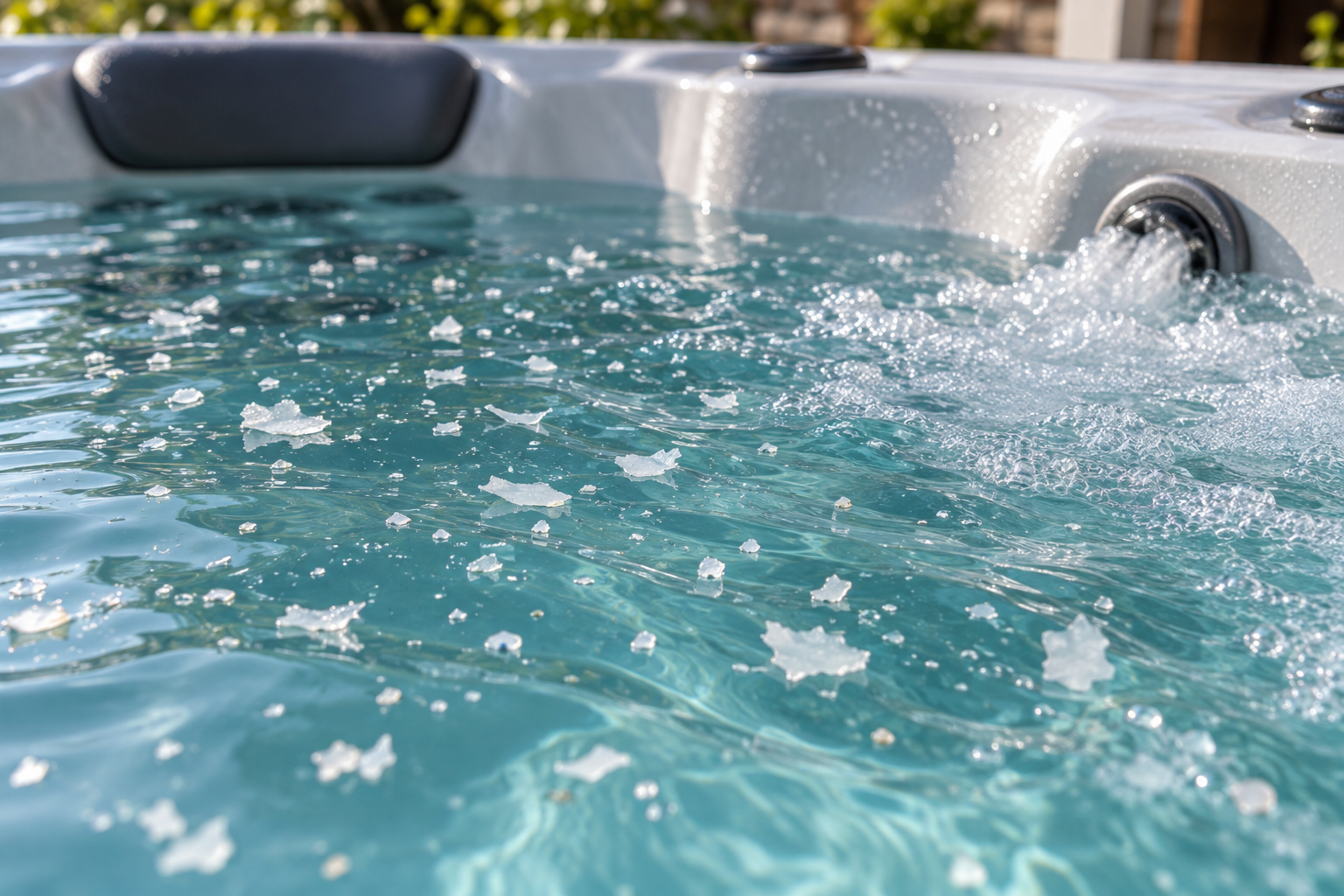
You glance at the surface and notice white particles floating in hot tub water, drifting like tiny snowflakes near the jets. If this sounds familiar, you are not imagining things. White flakes in hot tub water are a recognized issue, and in salt water systems they have a specific, well-understood cause. This guide helps you tell what the flakes are, confirm it without guessing, and work through removal and prevention in order.
A note for salt owners up front: a system like MagicSpa runs in a target salinity window of 500 to 2,500 ppm and serves tubs up to 2,500 gallons. The white-flake problem is most often tied to that salt environment, because the same electrolysis that makes chlorine can also encourage calcium to deposit on the cell. Knowing that helps you aim the fix at the right place instead of the filter or the sanitizer alone.
Not all white particles are the same. The three most common types, in order of likelihood:
The key is not to treat all three the same. Scale and biofilm call for different steps, and filter fragments point to a hardware item that needs replacement.
You do not have to guess. Scoop a flake out with a fine net or a white cloth and rub it between your fingers:
This simple check tells you whether you are dealing with a hardness-and-cell issue or a sanitation issue, which changes your next step entirely. It takes thirty seconds and prevents you from buying the wrong product.
Once you have identified the flakes, work in order so you address the source, not just the symptom:
The easiest flake to deal with is the one that never forms:
Our hot tub salt water care guide covers the testing and cleaning cadence that keeps scale from taking hold.
It helps to separate two related ideas. Scale forming on the salt cell is the underlying condition: mineral buildup on the plates. White flakes floating in the water are the result — pieces of that scale that have already broken free. You may see one without immediately seeing the other, but they share the same root cause: calcium coming out of solution and depositing where it should not. Treating the water balance and cleaning the cell addresses both at once, because you remove the existing deposit and stop the next one from forming. For a step-by-step look at reading cell status and cleaning it correctly, our salt system troubleshooting guide is a useful companion.
Safety callout: If the water is discolored, foul-smelling, or the particles appear alongside irritation you cannot explain, stop self-treatment. Drain and seek guidance rather than adding more chemicals.
Are white flakes in hot tub water harmful?
The flakes themselves are usually calcium scale, a cosmetic and equipment concern rather than a direct hazard. The bigger risk is the scaling process stressing the salt cell if left unaddressed, since heavy deposits interfere with normal operation.
Why do salt tubs get white flakes?
Salt cells can develop calcium scale on the electrodes, especially with high calcium hardness or high pH. Flakes are bits of that scale that have shed into the water, which is why this symptom shows up more in salt environments.
Can I just scoop the flakes out?
Scooping helps cosmetically, but it does not stop more from forming. You need to balance the water and clean the cell to stop the source, or the flakes will keep returning.
How do I know if it is scale or biofilm?
Rub a flake between your fingers. Gritty or chalky means calcium scale; slimy or soft means biofilm. The feel is a reliable first test and tells you which fix to apply.
Do I need to replace the salt cell?
Usually not. Cleaning the cell per the manual resolves most scale-related flaking. Replacement is a last step only when the cell is damaged or no longer responds after proper cleaning, as described in your manufacturer guidance.
Final Thought
White flakes in hot tub water are a solvable, specific problem — most often calcium scale from the salt cell rather than a mystery contaminant. Balance the water, clean the cell on schedule, and the snowstorm stays out of your spa. For the salt system side of ownership across larger setups, our swim spa salt water system guide shows how MagicSpa fits bigger volumes too. And if your water changes color instead of shedding flakes, our guide to fixing green spa water covers that symptom in the same cluster.