Address
304 North Cardinal
St. Dorchester Center, MA 02124
Work Hours
Monday to Friday: 7AM - 7PM
Weekend: 10AM - 5PM
Address
304 North Cardinal
St. Dorchester Center, MA 02124
Work Hours
Monday to Friday: 7AM - 7PM
Weekend: 10AM - 5PM
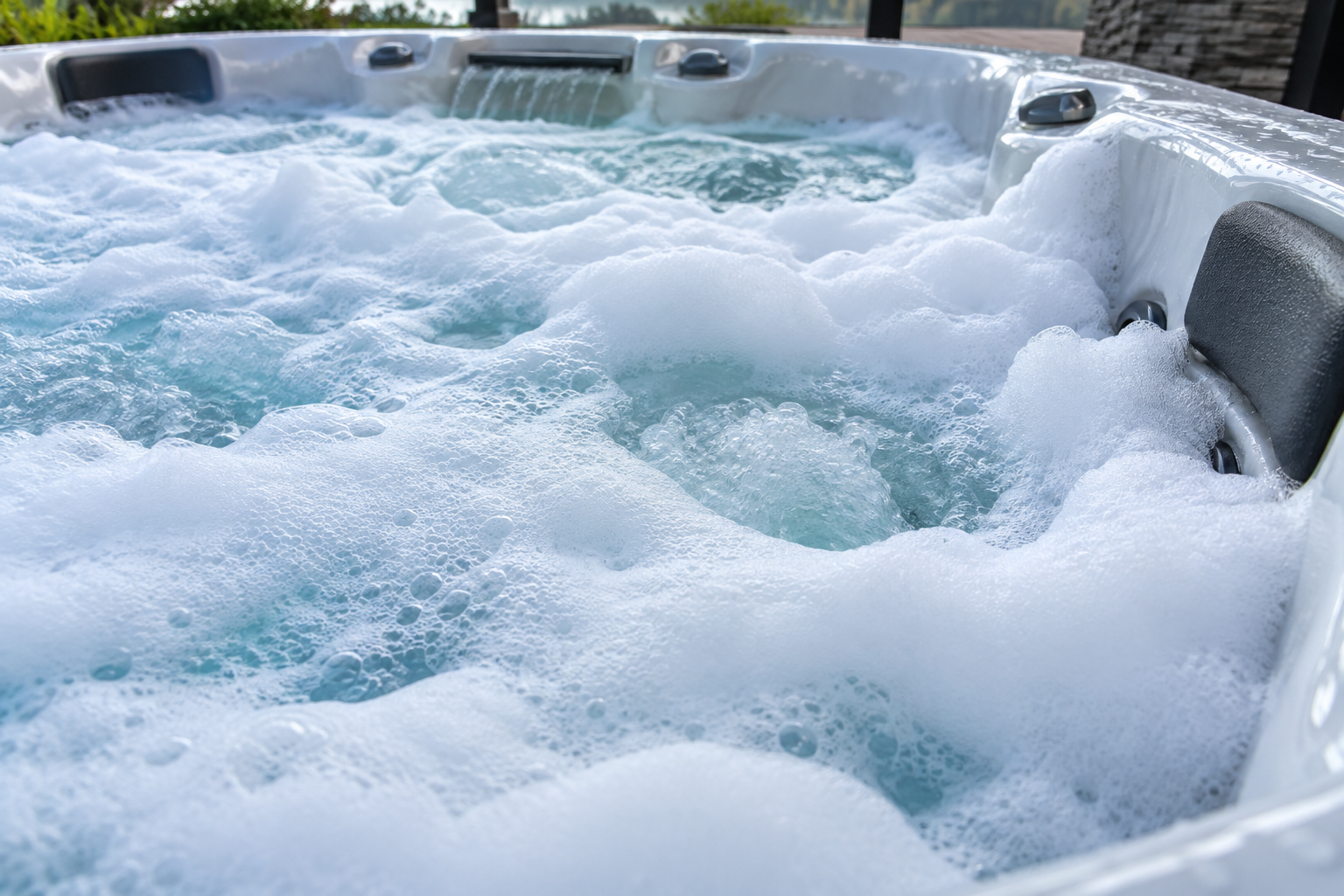
You step into the spa, turn on the jets, and instead of a few innocent bubbles you get a layer of thick foam. If you have wondered about foam in hot tub water, you are dealing with one of the more common — and more misunderstood — spa complaints. The good news is that foam is rarely a sign of danger. It is usually a signal that something soluble has built up in the water. This guide explains where the foam comes from, how to tell a harmless fizz from a real problem, and the ordered steps to clear it.
A quick frame for salt owners: a system like MagicSpa generates chlorine from salt in the water and does not, by itself, create foam. Foam is a water-quality symptom, not a chlorinator symptom. That means the fix almost always lives in your balance, your rinse routine, and your refill schedule rather than in the hardware.
Foam is essentially soap-like residue trapped in the water, whipped into a stable head by the jets. The jet action pulls air in and agitates the surface; if there is a surfactant present, that air gets locked into a persistent froth. The usual sources are:
The through-line is simple: foam needs something in the water that behaves like soap. Remove that something, and the foam loses its structure.
Not every bubble is a problem. A salt or jet system naturally injects air, and a brief fizz that vanishes in a minute or two is normal and expected.
A real issue looks different:
If the foam is persistent and builds with every soak, treat it as a water-quality task rather than a quirk of the jets. The distinction matters because the fix for a normal fizz is “do nothing,” while the fix for real foam is “remove the residue source and rebalance.”
Work through these in order so you do not waste product or chase the wrong cause:
After refilling a salt tub, use the salt calculator to bring salinity back into the target window for your system so the chlorinator resumes normal output.
Prevention is easier than correction, and it costs little:
Our hot tub salt water care guide maps out a maintenance rhythm that keeps residue from building in the first place.
Is foam in hot tub water dangerous?
Foam itself is usually a cosmetic and comfort issue tied to residue or low calcium, not a safety hazard. If the water is also discolored, smelly, or irritating, stop and investigate further rather than assuming it is only foam.
Will more chlorine get rid of foam?
Not directly. Sanitizer handles organic load but does not break foam. You still need to remove the residue source, balance calcium, and use defoamer if needed.
How much defoamer should I use?
Only the amount on the label. Defoamer is a spot treatment; overdosing can cause its own water issues and may leave an oily sheen.
Why does foam come back after I scoop it?
Because the cause is still in the water. Until you address residue, calcium, or aged water, the foam will re-form whenever the jets run. Scooping is cosmetic, not corrective.
Can low calcium hardness alone cause foam?
It can contribute strongly. Soft water froths more readily, so even with good rinse habits you may see foam if calcium hardness is below the recommended range. Test and adjust it as part of the fix.
Final Thought
Foam in hot tub water is a message, not a mystery: something soluble has built up, and the jets are just making it visible. Rinse, balance, and refresh, and the surface calms down. For the full map of salt-system symptoms, our hot tub salt system troubleshooting page ties foam to low chlorine, scaling, and cloudy water. For the broader water-balance picture on a salt system, our salt system compatibility guide explains how MagicSpa fits different tub setups. And if your water ever turns green instead of foamy, our guide to fixing green spa water covers that symptom in the same cluster.