Address
304 North Cardinal
St. Dorchester Center, MA 02124
Work Hours
Monday to Friday: 7AM - 7PM
Weekend: 10AM - 5PM
Address
304 North Cardinal
St. Dorchester Center, MA 02124
Work Hours
Monday to Friday: 7AM - 7PM
Weekend: 10AM - 5PM
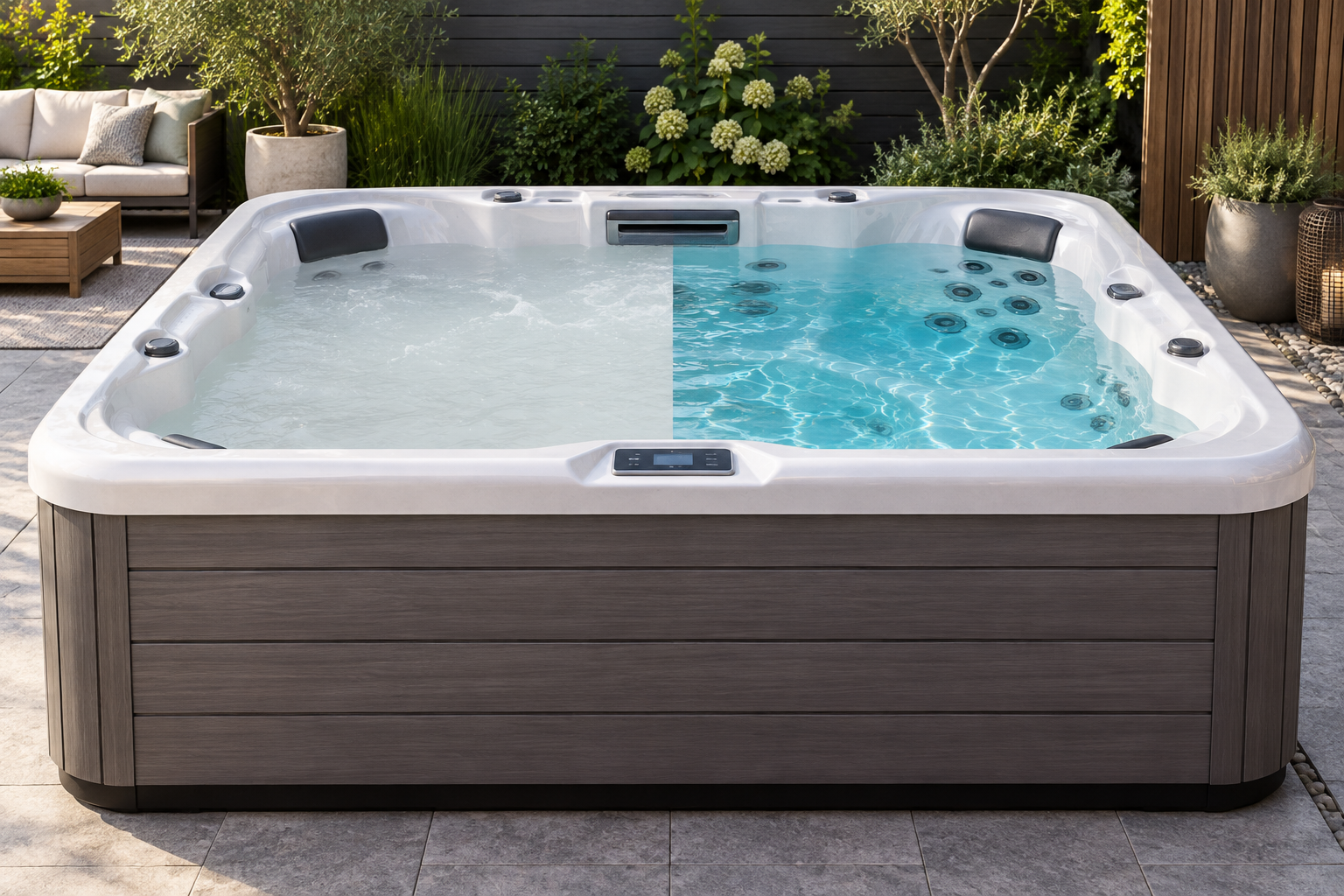
If you have looked into your spa and asked, “Why is my hot tub cloudy?”, you are in good company. Cloudy hot tub water is one of the most frequent complaints among spa owners, and it appears in both traditional chlorine tubs and salt water systems. The reassuring part is that the cause is usually a straightforward balance or filtration issue, not a broken component. This guide covers the usual suspects, explains where a salt chlorinator fits into the picture, and gives you an ordered routine to bring the water back to clear.
A quick note for salt owners: a unit like MagicSpa is built to operate in a target salinity window of 500 to 2,500 ppm and to serve tubs up to 2,500 gallons. Cloudiness in a salt tub is common even when the cell is working as intended, so the first move is almost never “the salt system is broken.”
Cloudiness is the visible sign of tiny suspended particles the filter cannot capture fast enough, or of sanitizer too low to break down organic material. The particles scatter light and the water looks milky or hazy. The most common causes are:
A common reflex is to assume cloudy hot tub water means the salt chlorinator has failed. That is rarely true. A salt water system such as the MagicSpa unit generates chlorine from dissolved salt and keeps doing so even when the water looks dull. Cloudiness usually points upstream to balance and filtration, not to the cell itself.
A salt system does add one variable worth checking: the target salinity window. MagicSpa is designed to operate between 500 and 2,500 ppm. If salinity drifts well outside that range, chlorination efficiency can drop, which indirectly lets water quality slip. If your reading is inside the window and the cell is still producing, treat the cloudiness as a water-care task rather than a hardware fault.
For a deeper look at what the cell does and how to read its status, see our salt system troubleshooting guide.
An ordered approach saves product and time, and it stops you from hiding one problem while creating another:
A clean cartridge is the quiet hero of clear water. To service it:
If you are unsure whether your cleaning rhythm is keeping up, our hot tub salt water care guide lays out a full maintenance cadence by season and usage.
Sometimes the water has simply aged past the point of a quick recovery. Plan a drain and refill when:
Refilling also resets salinity, so use the salt calculator to add the right amount for your volume. MagicSpa supports tubs up to 2,500 gallons, and the calculator shows how much pool salt to add per 100 gallons to land inside the target range. As a general rule, plan for roughly 2.5 cups of pool salt per 100 gallons, or about 1.5 pounds, though you should always confirm against your own test reading and the calculator.
Safety callout: If the water is discolored beyond cloudy, gives off a strong or foul odor, or the cause stays unclear after testing, stop self-diagnosis. Drain and seek guidance instead of stacking more product into the water.
Why is my hot tub cloudy even though the chlorine reads fine?
Often it is filtration or balance, not sanitizer. High pH or high calcium can haze the water while the chlorine number looks acceptable. Rinse the filter and verify pH, alkalinity, and calcium.
Can a salt system cause cloudy water directly?
Not usually. The cell makes chlorine; cloudiness generally comes from balance, filtration, or organic load. Confirm salinity is in range, then look at the filter and your test results.
How often should I rinse the filter cartridge?
A light rinse every couple of weeks and a deep clean monthly is a common rhythm, adjusted for how often you soak. Replace on the manufacturer schedule rather than waiting for visible failure.
Will a clarifier fix cloudy hot tub water?
A spa-safe clarifier can help the filter grab fine particles, but it treats the symptom. Fix low sanitizer, pH drift, or a clogged filter first, or the haze returns.
How long does it take to clear up?
With the right fix applied, many cases clear within a few hours of circulation. Stubborn haze tied to high calcium or a packed filter can take a full day of running the pump plus a filter service.
Final Thought
Cloudy hot tub water is rarely a mystery once you test first and act second. Keep sanitizer, pH, and filtration in their zones, and a salt system like MagicSpa will do its part without drama. For the next common color change in the water-problem cluster, our guide to fixing green spa water walks through that symptom too.