Address
304 North Cardinal
St. Dorchester Center, MA 02124
Work Hours
Monday to Friday: 7AM - 7PM
Weekend: 10AM - 5PM
Address
304 North Cardinal
St. Dorchester Center, MA 02124
Work Hours
Monday to Friday: 7AM - 7PM
Weekend: 10AM - 5PM
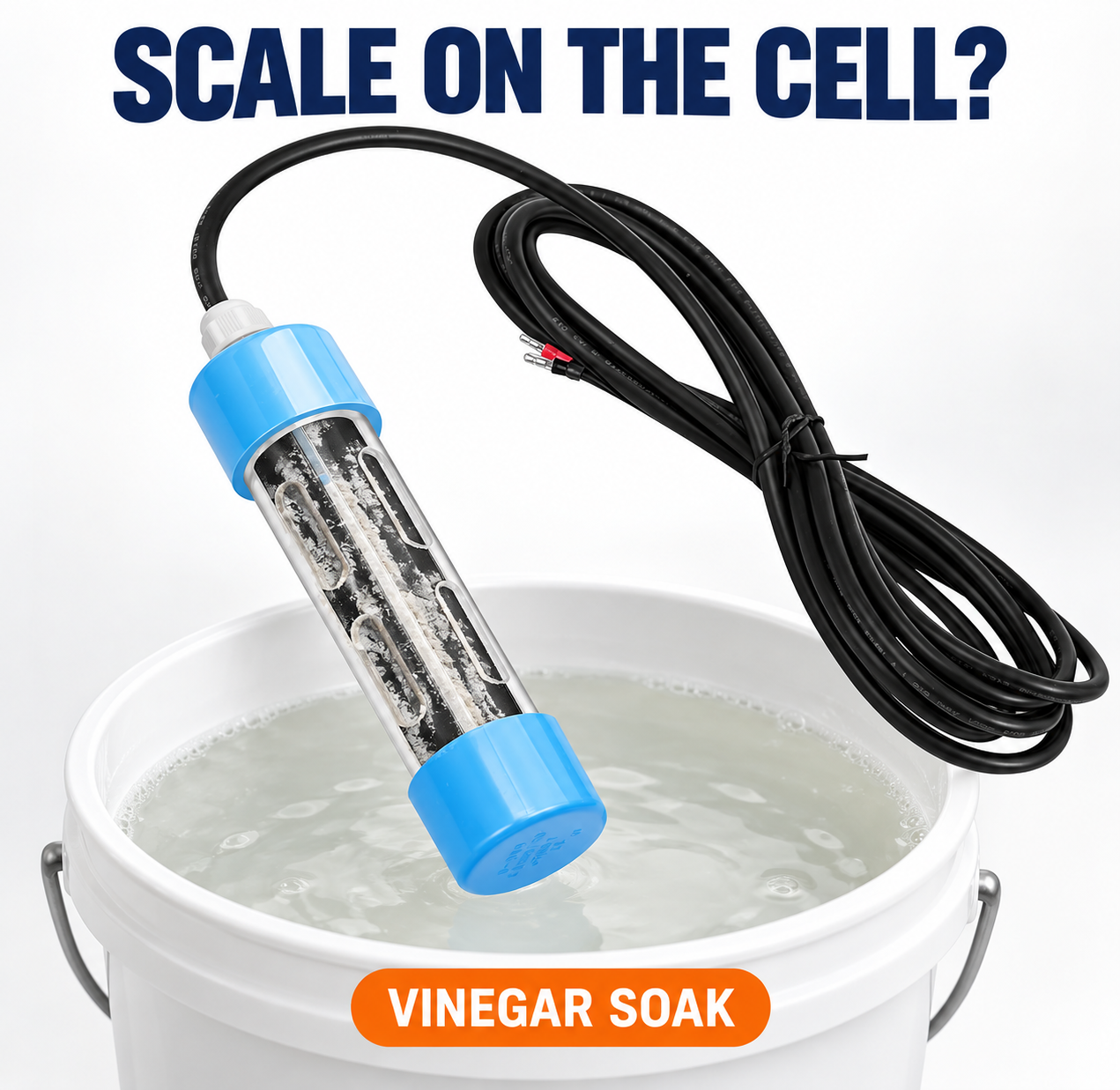
White scale on a salt cell is the most common reason a hot tub salt system slowly loses chlorine output. The cell is where your generator turns dissolved salt into chlorine, and when a crust builds up on the plates, less surface is doing the work. The good news: light scaling is normal and manageable. The cautious part: you should only clean it the way your manual allows, and you should never mix cleaning chemicals. This guide explains what the scale is, why it forms, how to inspect and clean safely, and how to tell the difference between “clean it” and “replace it.”
If you are here because chlorine dropped first, our hot tub salt system troubleshooting page shows where scaling fits in the larger picture.
The white deposit is mostly calcium carbonate – the same mineral residue you see on faucets and shower heads in hard-water areas. As water moves through the cell and the generator does its work, calcium that is naturally dissolved in the water can come out of solution and cling to the plates.
Scale shows up when the water wants to drop calcium faster than the cell can shed it. The usual drivers:
The prevention angle is mostly water balance, covered below and in our hot tub salt water care guide.
There is no single calendar interval that fits every tub, because scale rate depends on your water source, hardness, pH habits, and how heavily the tub is used. A sensible approach is regular inspection – for many owners that means checking the cell every few months, but treat that as a starting rhythm, not a fixed rule, since hard water can demand more frequent looks and soft water fewer.
Before you open anything near the cell:
Safety overrides speed here. If you are unsure the unit is fully isolated, stop and get help.
With power off, look through the cell (or remove it per the manual’s instructions):
This is the part to be careful about. We will not publish a specific acid concentration or homemade recipe, because the safe cleaner and method are product-specific and belong in your manual.
If you are working with the Zelinhol MagicSpa, follow its documented cleaning steps exactly; the unit is built for hot tubs and swim spas up to 2,500 gallons, and using an unapproved cleaner can affect a cell sized for that volume.
Cleaning fixes scale. It does not fix damage. Replace the cell only when there is a physical fault, not just because it looks used:
A cell that cleans up and tests fine does not need replacing. For install and handling context, the hot tub salt system installation checklist is useful when you reinstall.
Stop and get professional help if: you suspect any electrical fault, controller issue, or internal wiring problem; if a seal or fitting is damaged and you are unsure it is safe to reinstall; or if cleaning per the manual does not restore output and you are considering opening the control unit. Do not bypass alarms, operate wet electrical connections, or mix cleaning chemicals.
Is the white stuff on my cell dangerous?
It is mostly calcium carbonate, the same kind of mineral deposit found on taps. The caution is in the cleaning, not the deposit – use only manual-approved cleaners and never mix chemicals.
Can I just scrub the plates with a brush?
Only if your manual says that is safe for the plate material. Some plates are damaged by abrasive scrubbing, so follow the approved method rather than a guess.
How do I know it is scale and not something else?
Scale is a white or chalky crust on the plates. If output is low but the cell looks clean, the cause is more likely salt, pH, run time, or water demand – work the full check order first.
Will a clean cell instantly fix low chlorine?
Often it helps, but only if scale was the cause. Re-test after a full cycle; if chlorine stays low, move back to the broader troubleshooting steps.
If scaling has already let the water slip, the green spa water fix guide covers recovering cloudy or algae-started water once the cell is back to work.