Address
304 North Cardinal
St. Dorchester Center, MA 02124
Work Hours
Monday to Friday: 7AM - 7PM
Weekend: 10AM - 5PM
Address
304 North Cardinal
St. Dorchester Center, MA 02124
Work Hours
Monday to Friday: 7AM - 7PM
Weekend: 10AM - 5PM
Shopping for a hot tub sanitizing method usually comes down to two paths: keep adding chlorine by hand, or install a salt chlorine generator. Here's an honest look at the costs you can actually plan around.
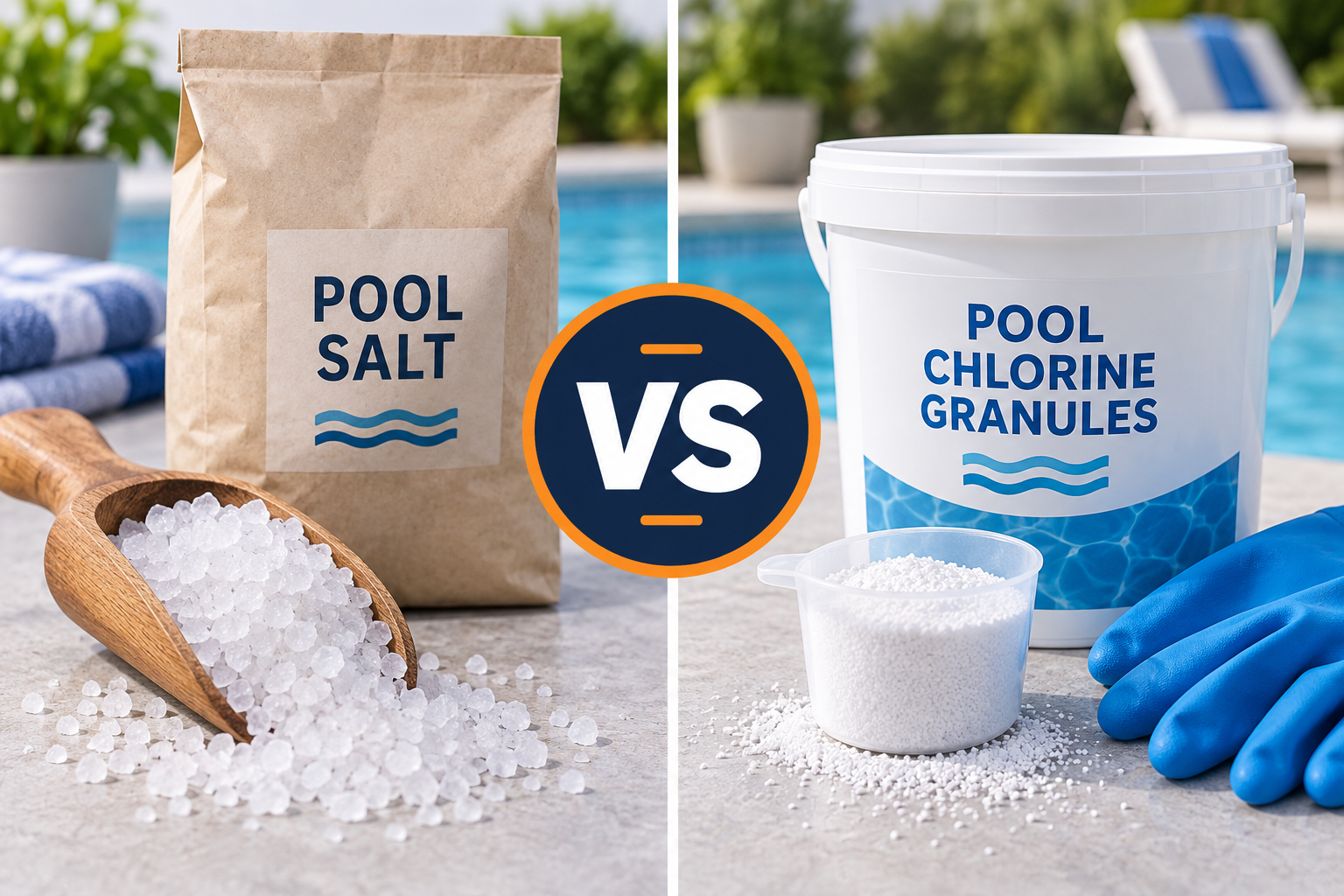
Disclosure: Zelinhol makes the MagicSpa salt system — we’ve written this comparison from the cost-structure side, and it applies the same “salt is not chlorine-free” honesty to both paths.
Shopping for a hot tub sanitizing method usually comes down to two paths: keep adding chlorine by hand, or install a salt chlorine generator that makes chlorine from salt. When you plan a salt water hot tub budget against a traditional chlorine one, the marketing on both sides can get loud, so this comparison sticks to the parts you can actually plan around — upfront spend, recurring chemical costs, time, and the learning curve — without quoting prices that shift by retailer, region, and season.
One thing to settle up front: a “salt water hot tub” is not a chlorine-free hot tub. The generator electrolyzes dissolved salt and produces chlorine in the water. You’re changing how chlorine gets there, not removing it. That distinction matters for every cost and maintenance claim below.
Traditional chlorine. You buy chlorine in some form — tablets, granules, or liquid — and add it on a schedule. You also keep stabilizer (cyanuric acid), pH adjusters, alkalinity buffers, and a shock product on hand. Sanitizer level is something you manage manually, by testing and dosing.
Saltwater (generator). You dissolve pool-grade salt into the tub once at refill. A low-voltage cell powered by a control box electrolyzes that salt and generates free chlorine continuously, then the chlorine reverts toward salt as it does its work — so the same salt stays in the water and is reused. You still test and shock, but you stop buying and handling routine chlorine.
The practical difference is recurring vs. one-time: traditional chlorine is a steady purchase you repeat, while a generator fronts the equipment cost and asks mainly for salt and testing.
The table below is directional and qualitative on purpose. Actual numbers depend on your tub size, local chemical and electricity prices, water chemistry, and how heavily you use the tub.
| Cost factor | Salt water (generator) | Traditional chlorine |
|---|---|---|
| Upfront equipment | One-time purchase of the generator and cell | Minimal — just a test kit and basic tools |
| Routine sanitizer | Salt added at refill; occasional top-up | Recurring purchase of tablets/granules/liquid and shock |
| Other chemicals | pH, alkalinity, stabilizer, shock still needed | pH, alkalinity, stabilizer, shock still needed |
| Maintenance time | Test + shock + occasional cell cleaning | Test + dose + store/handle chlorine regularly |
| Learning curve | Understand salt level, output setting, cell care | Understand dosing, stabilizer, shock timing |
Two rows are identical on purpose: a salt system does not remove pH balancing, stabilizer management, or shock. Those costs exist on both sides.
Looking past a single season, the two methods flip their cost shape.
A salt generator asks for its equipment cost up front. After that, your recurring spend drops to salt (a low-cost, infrequent purchase) plus the same balancing chemicals you’d buy anyway. The main ongoing variable is the cell: like any electrolytic component it wears with use and eventually needs replacement, which is a mid-life expense to plan for rather than a surprise.
Traditional chlorine spreads the cost differently. There’s almost nothing to buy at the start, but the sanitizer and shock purchases repeat every season, and they add up. Because you’re constantly consuming and replacing product, the “small” recurring cost compounds.
Which is cheaper over five seasons depends entirely on your setup. A lightly used tub where you’d buy little chlorine might make the generator’s upfront cost harder to justify; a heavily used tub that burns through sanitizer could recover the equipment cost faster. Costs vary by region, water chemistry, and usage — any calculator that hands you a single dollar figure is guessing. Use the structure above to frame your own numbers.
This is where expectations need correcting. A salt water hot tub is not a “fill it and forget it” appliance.
What gets easier: you stop measuring and handling routine chlorine, and the generator holds a more stable sanitizer level between checks because it produces chlorine continuously rather than in doses you add by hand. For many owners that steadier level is the real quality-of-life win.
What stays the same: you still test free chlorine, pH, alkalinity, and stabilizer; you still shock after heavy use or contamination; and the cell itself needs attention. Depending on your water hardness and usage, the cell can accumulate scale and needs cleaning (most generators reverse polarity automatically to slow that, but it doesn’t eliminate it). You also top up salt when you refill or after splash-out.
So the honest framing is: a generator reduces how often you handle chlorine and smooths sanitizer levels, but it does not remove the need for basic water care. Anyone promising a maintenance-free salt tub is overselling.
A persistent myth is that a salt water hot tub is “chlorine-free” or somehow outside normal sanitization. It isn’t. The salt cell’s job is to manufacture chlorine from salt through electrolysis — the same sanitizer that protects the water in a traditional setup. The water still contains free chlorine, still needs to be tested to a safe range, and still relies on you to keep pH and alkalinity in line.
The appeal of salt isn’t “no chlorine.” It’s automated, on-site chlorine production plus a lower day-to-day handling burden. Keeping that straight protects you from both over-promising and under-maintaining.
Lean toward a salt generator if: you use the tub often and resent the routine of buying, storing, and dosing chlorine; you want steadier sanitizer levels between tests; and you’re comfortable with a one-time equipment purchase and basic cell care. For a compact swim spa or hot tub, sizing matters — a unit like the MagicSpa (rated to 2,500 gallons, low 500–2,500 ppm salt window, about 2.5 cups of salt per 100 gallons at refill) covers most hot tubs and smaller swim spas without oversizing.
Lean toward traditional chlorine if: you want the lowest possible startup cost, you use the tub only occasionally, or you’d rather not learn a new system and prefer the simplicity of dosing by hand. It’s the lower-commitment entry, at the cost of recurring purchases and more hands-on time.
Either way: size the method to your actual water volume, and don’t skip the water testing. A generator sized wrong — too large for a small tub or too small for a big one — creates its own problems on both sides of the cost ledger.
If you want the day-to-day experience side of the switch — what the water feels like and how your routine changes — rather than the cost structure, our salt vs chlorine comparison covers that angle.
Is a salt water hot tub more expensive than chlorine?
Not strictly. A generator costs more up front but cuts recurring chlorine purchases; traditional chlorine is cheap to start but adds up season after season. Which wins over time depends on tub size, usage, and local prices.
Do I still need to buy chlorine with a salt system?
You stop buying routine chlorine, but you still keep shock and balancing chemicals (pH, alkalinity, stabilizer) on hand, and you still shock after heavy use. The generator handles daily sanitizer production, not the entire chemistry.
How much salt does a salt hot tub use?
Salt is added mainly at refill, not continuously — the same salt recirculates. On a low-salt system the addition is modest; for example, the MagicSpa’s window works out to about 2.5 cups of pool salt per 100 gallons. You top up only after refills or significant splash-out.
Does salt mean I never clean the tub?
No. You still test and balance water and shock as needed. The cell may need descaling depending on water hardness, and the tub itself still needs periodic draining and cleaning on the same schedule as any hot tub.
A salt water hot tub trades a one-time equipment cost for lower recurring chlorine spending and less hands-on dosing, while traditional chlorine keeps startup minimal at the price of steady repeat purchases. Neither removes testing, balancing, or shocking — and both still rely on chlorine to keep the water safe. Choose based on how often you use the tub and whether you prefer to pay once or pay a little, often.
If you’re weighing a generator, start with the compatibility guide and the installation checklist, size your tub with the salt calculator, and review the care guide for the routine. For troubleshooting once running, see the troubleshooting guide.